

At-a-Glance Reference
Customize Today’s Schedule From Your Baby’s Real Wake Time
From about 5 to 8 months. The app keeps 3 naps until you confirm repeated signs.
Educational reference ranges from the NapBaby app model, not a promise about your baby.
Sample 4-Month-Old Sleep Schedule (07:00 Wake-Up)
From a 07:00 wake, the 4-month model is two hours awake before every sleep: naps around 09:00 and 13:00, a short third nap around 17:00 and night sleep from about 19:45. The third nap is short on purpose — it bridges the late afternoon so bedtime doesn’t arrive overtired.
-
07:00
Morning wake — daylight and first feed The day’s anchor: every window is counted from here.
-
08:48
Start settling for nap 1 12 min before the window closes · not counted as sleep
-
09:00–11:00
Nap 1 · 2h in the model After a 2h wake window
-
12:48
Start settling for nap 2 12 min before the window closes · not counted as sleep
-
13:00–15:00
Nap 2 · 2h in the model After a 2h wake window
-
16:48
Start settling for nap 3 12 min before the window closes · not counted as sleep
-
17:00–17:45
Nap 3 · 45 min in the model After a 2h wake window
-
19:33
Bedtime wind-down Dim light, feed and a safe sleep space · 12 min before the final window closes
-
19:45
Asleep for the night (target) After a final window of 2h
See How a 4-Month Nap Is Logged Without Counting Rocking Time
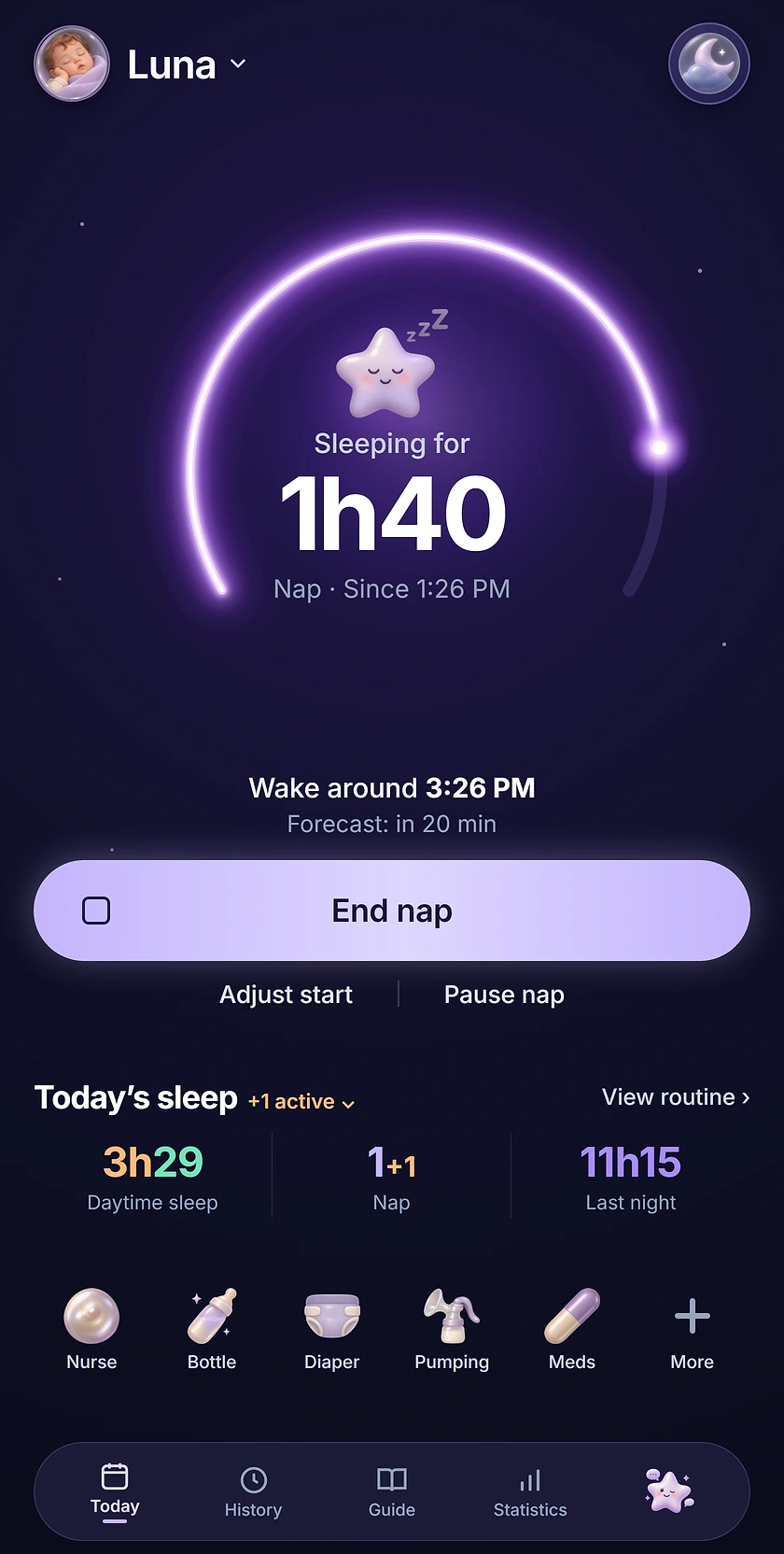
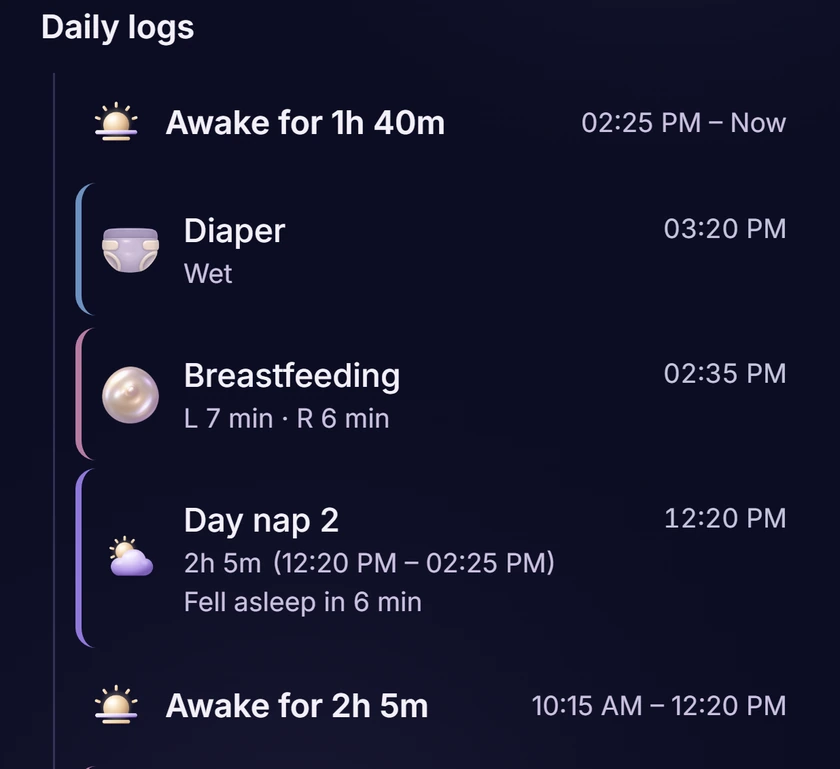
Counting 15 minutes of soothing as nap time skews the next wake window. In NapBaby Premium, you log settling separately from net sleep and keep the next 2-hour window anchored to your baby’s real wake-up.
- Tap “Settling to sleep” about 12 minutes before the 2-hour window closes — soothing minutes are not counted as sleep.
- Tap “Fell asleep” once eyes stay closed so net nap duration starts from actual sleep onset.
- If a single-cycle nap ends at 35 minutes, NapBaby Premium notes “Short nap logged — estimate kept” and counts the next 2-hour window from real wake-up.
What Is Actually Happening at 4 Months
Newborns drop straight into deep sleep. Around 3 to 4 months, babies start cycling through lighter stages first, much as adults do, and they surface more fully between cycles — roughly every 30 to 50 minutes in naps and several times a night. A baby who used to sleep through a cycle change now notices it, and if they fell asleep being fed or rocked, they may want the same help to go back down.
At the same time the days are full of news: rolling, grabbing, discovering hands and voice, and a fresh interest in everything around them. Feeds get shorter and more distracted. All of this can shorten naps and break up nights for a few weeks.
The change in sleep cycles is permanent; the rough patch usually is not. Most families see things settle within two to six weeks as their baby learns to link cycles, especially when the day offers enough sleep opportunities and bedtime isn’t late.
Why the Third Nap Stays Short
The model keeps the third nap at about 45 minutes on purpose. A long late nap pushes bedtime later, and a late bedtime at this age often means a harder night. If the third nap runs long, wake your baby gently around the 45-minute mark so the final 2-hour window still lands bedtime near 19:45.
The third nap usually goes between 5 and 8 months — by repeated signs, not by birthday. Until then, a 20- to 30-minute catnap in the stroller or carrier at 17:00 counts.
What Helps During the Regression
- Protect the 2-hour windows; an overtired baby surfaces more often between cycles.
- Offer the third nap even when the first two went well.
- Let some sleep starts happen in the crib, drowsy or awake, so falling asleep there becomes familiar — at your family’s pace.
- Practice rolling during the day; once your baby rolls both ways on their own, you can leave them in the position they choose, still placing them on their back to start.
- Keep the night feeds your baby needs, and ask your pediatrician before dropping any.
Signs of Overtiredness vs. Undertiredness
Waited a little too long (overtired)
- Waking every 30–45 minutes after bedtime
- Naps shrinking to a single cycle, then crying
- Rubbing eyes and pulling ears before 2 hours awake
- Fussing during feeds and arching away
- Bedtime getting longer and louder
Not tired enough yet (undertired)
- Rolling and practicing new skills in the crib for 20+ minutes
- Chatting happily when laid down
- Skipping the third nap but staying cheerful until bedtime
- Long, playful feeds and alert, smiley awake time
- Waking early from naps, but in a good mood
Practical Steps
- Count 2 hours from the real wake time and start settling about 12 minutes before the window closes.
- Cap the third nap around 45 minutes so bedtime stays near 19:45.
- After a short nap, the next window is counted from when it ended — watch for sleepy cues a little earlier.
- Pick one sleep start a day — often bedtime — to practice falling asleep in the crib, with whatever support your baby needs.
- Stop swaddling now if you haven’t already; an arms-out sleep sack is safer for a baby who rolls.
- Give it two to three weeks before deciding a new pattern is here to stay.
A Short Nap Doesn’t Throw Off the Whole Day
When a nap ends after 35 minutes, NapBaby keeps the same 2-hour window and counts it from when the nap actually ended, so the next nap simply comes earlier — the window is never stretched to make up the missing minutes. With Premium, the note ‘Short nap logged — estimate kept’ appears with the next estimate, and you can talk the rest of the day through with Luma.
Safe Sleep Reminder (AAP)
Place your baby on their back for every nap and every night, on a firm, flat, non-inclined crib or bassinet surface with only a fitted sheet — no pillows, bumpers, loose blankets or soft toys — following American Academy of Pediatrics (AAP) safe-sleep guidance. Keep the night feeds your baby needs, and take questions about feeding, growth, breathing or illness to your pediatrician; this guide organizes routine information and is not medical advice.